


Carotid Artery Ultrasound in Phoenix, AZ: A Simple Way to Learn More About Your Stroke Risk

July 15, 2026
Woman kissing smiling baby held in her arms.

Share this article

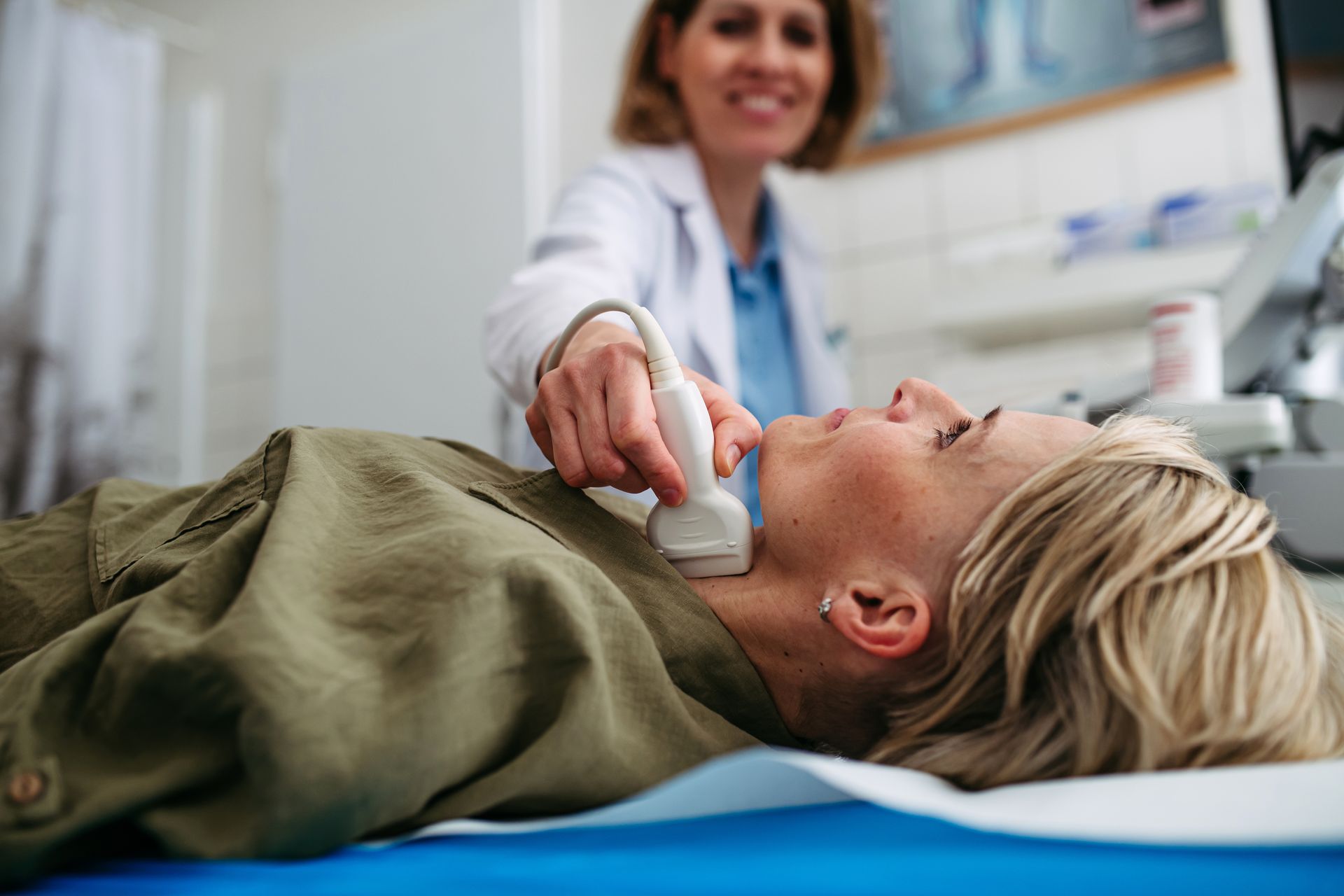
Healthcare worker performing an ultrasound on a patient lying on a bed

Why Your Carotid Arteries Matter

When most people think about heart health, they focus on the heart itself. But the arteries leading to your brain are just as important.


Your carotid arteries are two major blood vessels located on each side of your neck. They deliver oxygen-rich blood from your heart to your brain. Over time, these arteries can develop plaque buildup, causing them to narrow—a condition known as carotid artery disease.


Because carotid artery disease often develops without symptoms, many people don't realize they have it until it has progressed. A carotid artery ultrasound is a safe, non-invasive way to evaluate these arteries and provide valuable information about your vascular health.

What Is a Carotid Artery Ultrasound?

A carotid artery ultrasound is an imaging exam that uses sound waves to create detailed pictures of the carotid arteries in your neck.


Unlike CT scans or X-rays, ultrasound uses no radiation. During the exam, a trained ultrasound technologist gently moves a small handheld device over your neck while images of your arteries are captured in real time.


The test is painless, non-invasive, and typically takes less than 30 minutes.

What Can a Carotid Ultrasound Detect?

A carotid ultrasound helps evaluate blood flow and can identify changes within the arteries that may increase the risk of stroke or other vascular conditions.


The exam may detect:


  • Plaque buildup within the carotid arteries
  • Narrowing of the arteries (carotid stenosis)
  • Changes in blood flow
  • Areas that may require additional evaluation by your healthcare provider


Finding plaque early doesn't necessarily mean a procedure is needed. In many cases, the results can help guide conversations about lifestyle changes, medications, or ongoing monitoring with your physician.

Why Is Plaque Buildup Important?

Plaque is made up of cholesterol, calcium, fat, and other substances that gradually accumulate inside artery walls.


As plaque grows, it can reduce blood flow to the brain or become unstable. If a piece of plaque breaks away or a blood clot forms, it can block blood flow to the brain and cause a stroke.


The good news is that plaque buildup often develops gradually over many years. Identifying it early provides an opportunity to work with your healthcare provider on strategies that may help reduce future cardiovascular risk.

Who Should Consider a Carotid Artery Ultrasound?

A carotid artery ultrasound is not recommended as a routine screening test for every adult. However, it may be appropriate for individuals who have certain cardiovascular risk factors or who have been advised by their healthcare provider to undergo vascular screening.


You may benefit from discussing carotid ultrasound with your healthcare provider if you have:


  • High blood pressure
  • High cholesterol
  • Diabetes
  • A history of smoking
  • A family history of stroke or vascular disease
  • Known coronary artery disease
  • Peripheral artery disease
  • A previous transient ischemic attack (TIA) or stroke
  • A carotid bruit (an abnormal sound heard through a stethoscope)


Every person's health history is different, which is why screening decisions should be individualized.

What Happens During the Exam?

Your carotid ultrasound is simple and comfortable.


During your appointment:


  • You'll lie comfortably on an exam table.
  • A clear gel is applied to your neck.
  • The ultrasound technologist gently moves the transducer over both sides of your neck.
  • Images of your carotid arteries are recorded.
  • The exam is completed in approximately 20–30 minutes.


There are no needles, no injections, no recovery time, and you can return to your normal activities immediately afterward.

Why Choose Life Guard Imaging in Phoenix?

At Life Guard Imaging, we believe preventive health starts with information.


Our carotid artery ultrasound is performed using advanced ultrasound technology and interpreted by experienced physicians who carefully evaluate your images.


If abnormalities are identified, your results can be shared with your primary care physician or specialist to help guide any recommended next steps.


Combined with our preventive imaging services, including heart scans and full body CT scans, carotid ultrasound provides another valuable way to better understand your cardiovascular health.

Frequently Asked Questions

  • Does a carotid ultrasound prevent a stroke?

    The ultrasound itself does not prevent stroke. It provides information that may help identify plaque or narrowing in the carotid arteries so you and your healthcare provider can make informed decisions about your care.

  • Does the test use radiation?

    No. Carotid ultrasound uses sound waves and does not expose you to radiation.

  • Is the exam painful?

    No. The exam is non-invasive and painless. Most patients describe it as comfortable and quick.

  • How long does the appointment take?

    Most carotid artery ultrasounds are completed in about 20 to 30 minutes.

  • What happens if plaque is found?

    Your physician will review your results and may recommend additional evaluation, lifestyle modifications, medications, or continued monitoring depending on your individual situation.

Schedule Your Carotid Artery Ultrasound in Phoenix

Your vascular health plays an important role in your overall well-being.


If you're interested in learning more about your carotid arteries or want to determine whether a carotid artery ultrasound is right for you, the team at Life Guard Imaging is here to help.


Contact our Phoenix location today to schedule your carotid artery ultrasound or learn more about our preventive imaging services.

Recent Posts

Doctor consulting with a patient at a desk, taking notes in a bright clinic office.
July 15, 2026
Learn how an Epicardial Fat Report can provide additional insight into your heart health during your CT heart scan in Phoenix, Arizona.
CT scan machine in a bright, modern room. A bed is positioned to enter the machine's circular opening.
November 26, 2025
Life Guard Imaging CT scan clinic in Phoenix shares information about the preventative care programs we offer for Phoenix’s first responders and their importance.
CT scan slices of the abdomen, showing internal organs in shades of blue.
November 26, 2025
Life Guard Imaging CT scan clinic in Phoenix discusses how a quick fifteen-minute low-dose CT scan can detect early stages of lung cancer and why it matters.
Woman lying in a CT scanner; doctor in white coat stands nearby, observing.
November 26, 2025
Life Guard Imaging CT scan clinic in Phoenix explains why giving the gift of a CT scan is a great idea for the holidays and could save the life of a loved one.
Doctor pointing at lung x-ray, explaining results to patient in an office.
November 26, 2025
The CT technicians at Life Guard Imaging CT scan clinic in Phoenix share why low-dose CT scans are ideal for diagnostic lung imaging and preventative screening.
Doctor pointing to a glowing, digital, skeletal representation of a human. Blue tones.
November 26, 2025
Life Guard Imaging in Phoenix, AZ discusses why a virtual colonoscopy is so important for screening for colon cancer early and how our team can help.
Doctor comforts patient sitting on a medical bed near a CT scanner.
November 26, 2025
Life Guard Imaging CT scan clinic in Phoenix, AZ discusses the importance of regular CT scans and the importance of preventative screening for Phoenix residents.
Surgeon viewing heart scan on monitor during surgery. Operating room setting, medical equipment.
November 26, 2025
Life Guard Imaging clinic in Phoenix shares how regular heart screenings, if you’re over the age of forty, can save your life. Visit our Phoenix clinic today!
CT scanner, white with a purple examination table; blurred interior of a medical facility.
November 26, 2025
Life Guard Imaging in Phoenix discusses common myths about CT scans so our patients are informed about how important CT scans are in preventative healthcare.